

Do you wake up feeling like you are already running late, even if your alarm just went off? For millions of people, morning anxiety is a silent but persistent companion. Before your feet even touch the floor, your mind is likely racing through your to-do list, sending a cascade of stress hormones through your body.
But you don’t need an hour-long meditation practice to change the trajectory of your day. By dedicating just five minutes to a grounding breaths quick morning exercise, you can biologically reset your nervous system, transition out of flight-or-fight mode, and cultivate a sense of daily calm. This simple somatic practice acts as an anchor, centering your mind and body before the chaos of the day takes over.
Key Takeaways: Why Morning Grounding Works
- Rapid Biological Reset: Taking slow, deliberate belly breaths immediately signals your brain that you are safe, lowering your heart rate.
- Vagus Nerve Stimulation: Deep diaphragmatic breathing stimulates the vagus nerve, which turns off your body’s stress response.
- No Equipment Needed: This exercise can be done right in your bed, on your bedroom floor, or even sitting on the edge of your mattress.
- Saves Time: It takes less than five minutes, making it incredibly easy to integrate into any busy lifestyle.
The Science of Somatic Grounding in the Morning
When you wake up, your body naturally experiences a spike in cortisol—often called the cortisol awakening response (CAR). While this hormone is necessary to help you wake up, elevated stress levels can make this spike feel like sudden anxiety.
Using a grounding breaths quick morning exercise directly targets this physiological response. When you focus on your breath and physically anchor yourself to your surroundings, you engage in somatic experiencing. This practice helps you get out of your analytical mind and drop into your physical body, which is the fastest way to halt spiraling thoughts.
According to research on pulmonary health and mindfulness, conscious deep breathing improves oxygen exchange, stabilizes blood pressure, and boosts cognitive focus for the hours ahead. [External Link: Insert high-authority external URL on the physiological benefits of deep breathing with anchor text “clinical studies on diaphragmatic breathing”].

Step-by-Step: The 5-Minute Grounding Breaths Quick Morning Exercise
This simple, sequential routine is designed for absolute beginners and seasoned practitioners alike. For maximum effect, try to do this before you check your smartphone. If you struggle to stay off your phone when you wake up, you can pair this routine with our guide on The Art of the Mindful First Hour
Step 1: Find Your Anchor (1 Minute)
Sit comfortably either on the edge of your bed or flat on the floor with your spine straight but relaxed. Place both feet flat on the ground. Close your eyes and bring your entire awareness to the soles of your feet. Feel the solid support of the earth beneath you.
Step 2: The Cleansing Exhale (30 Seconds)
Before taking a deep breath in, you must empty your lungs. Take a deep, slow breath out through your mouth, making a soft sighing sound. Empty your lungs completely to prepare your body for fresh oxygen.
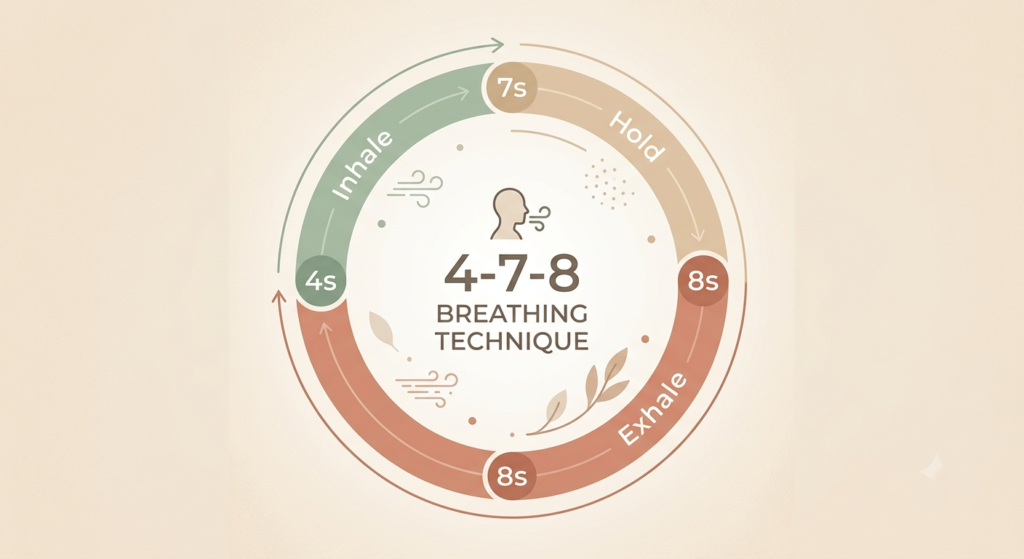
Step 3: Practicing the 4-7-8 Technique (3 Minutes)
This specific breathing ratio is highly effective for immediate nervous system regulation:
- Inhale quietly through your nose for a count of 4 seconds, letting your belly expand fully like a balloon.
- Hold your breath at the top for a count of 7 seconds.
- Exhale slowly and completely through your mouth, making a gentle “whoosh” sound, for a count of 8 seconds.
- Repeat this cycle four times.

How to Stay Consistent When You Are Busy
The greatest barrier to a morning routine is the belief that it has to be perfect. If five minutes feels too long, start with just three rounds of deep breathing. Consistency is far more valuable than duration.
To build a lasting habit, try habit stacking. Anchor your new breathing exercise to an action you already do every single morning without fail. For example, practice your grounding breaths while your morning coffee is brewing, or right after you brush your teeth. By linking the new habit to an established anchor, you remove the mental friction of trying to remember to do it.
Conclusion: Breathe in Calm, Let Go of the Rush
Starting your morning with rush and reactivity sets a chaotic tone for the rest of your day. By pausing for just a few moments to practice a grounding breaths quick morning exercise, you reclaim control over your nervous system. You transitions from a state of survival to a state of intention. Give yourself the gift of these five minutes tomorrow morning—your mind, body, and day will thank you for it.
Frequently Asked Questions
What are the benefits of a grounding breaths quick morning exercise?
A morning grounding breath exercise instantly activates the parasympathetic nervous system, lowers cortisol levels, reduces morning anxiety, improves lung capacity, and sharpens mental focus for the day ahead.
Can I do this grounding exercise lying down in bed?
Yes, you can absolutely practice this exercise while lying flat on your back in bed. However, if you find yourself falling back asleep, sitting upright with your feet flat on the floor is highly recommended to help build physical alertness.
How long does it take to feel the effects of grounding breaths?
Most people feel an immediate drop in physical tension and a sense of mental clarity after just three to four rounds of deep, diaphragmatic breathing (approximately 90 seconds of practice).